O Preco de uma Copa
  • Home
  • Banco de Dados
    • Copa do Mundo de 1950 >
      • Copa 50 em São Paulo
      • Copa 50 Rio de Janeiro
      • Copa 50 Curitiba
      • Copa 50 Porto Alegre
      • Copa de 50 em Belo Horizonte
      • Copa 50 em Recife
      • Legado da Copa de 1950
    • Copa do Mundo de 2014 >
      • Copa de 2014 em São Paulo
      • Copa de 2014 Brasília
    • Documentos Oficiais >
      • Matriz de Responsabilidade 2014
      • Estádios pós-Copa
    • Reportagens Especiais >
      • Turismo
      • Obras Inacabadas 2014
      • Comparação das Copas
      • Elefantômetro
      • O Preço das Copas
  • Contato
  • Quem somos
  • O projeto
  • O legado intangível
PT

The undelivered
​ legacy

At least 30% of the infrastructure projects carried out for the 2014 FIFA World Cup in Brazil and considered the post-tournament legacy are still uncompleted or have been shelved. Only the arenas are 100% finished.
Beatriz Farrugia
August 2021

In 2007, when Brazil was chosen to host the 2014 FIFA World Cup, the Brazilian government justified its bids and budgets affirming that the infrastructure projects carried out for the football championship would benefit the population in the long-term. Nevertheless, seven years after the event, the 12 host cities are still waiting for the infrastructure legacy. 

A data investigation showed that at least 30% of the infrastructure projects promised as the legacy of the World Cup have not been completed.

Using the Freedom of Information Act (FOIA) and making more than 230 requests to 33 different public bodies in Brazil during three months, it was possible to track the outcomes of 121 infrastructure projects planned for the 2014 FIFA World Cup.

The use of FOIA Requests was necessary to investigate the status of each project because the official website dedicated to the transparency of the World Cup in Brazil was taken down in 2018, making it impossible to monitor the situation. The FOIA requests, files, contracts and documents collected during this investigation can be accessed here.
​

The 121 infrastructure projects were divided into four categories (mobility and transport, airports, ports and stadiums), and involved the 12 host cities: São Paulo, Rio de Janeiro, Porto Alegre, Curitiba, Belo Horizonte, Brasília, Cuiabá, Salvador, Natal, Recife, Fortaleza and Manaus.

The projects were listed in an official document called “FIFA World Cup Responsibilities Matrix”, and its first version was dated 13 January 2010.

​
​Between 2010 and 2014, the matrix changed several times, with projects being excluded or included. Nonetheless, 121 infrastructure projects in total were officially presented by the Brazilian authorities and promised as the infrastructure legacy of the FIFA World Cup. 


Among the four categories of projects, the interventions in stadiums were the only ones that did not change over the years. Besides, the arenas are the only type of infrastructure project 100% delivered before the 2014 FIFA World Cup. 
​

The other three categories remain uncompleted.
​
Only 64.4% of the infrastructure projects were completed until June 2021.  Ports, airports and urban mobility constitute 37 uncompleted or shelved projects nowadays. However, since it was not possible to check the status of six projects, this number could be even higher. ​
Several reasons explain why the projects are delayed or have been shelved, such as expropriations, problems with environmental licenses and unexpected events during the construction. 
​

However, according to experts, most of those situations could have been avoided by adopting adequate planning.

“Those problems are solved with planning and a robust executive project, which can identify all the possible risks: if there is archaeological heritage along the way, if a local community will be affected, if the project touches an indigenous village, etc.”, said Rodrigo Prada, from the National Union of Architecture and Engineering Companies (Sinaenco), which monitors the infrastructure projects for the World Cup in Brazil since they were announced. 

Prada also affirmed that the Differentiated Contracting Regime (RDC) contributed to the delay of a large number of World Cup infrastructure projects. 

Established in 2011 by the Federal Law No. 12,462, the RDC aimed to provide more flexibility in public bidding and contracting for the 2014 FIFA World Cup and the 2016 Olympic Games in Brazil.  

“In practical terms, the RDC allowed public bodies to contract projects without suitable planning. Most of the works carried out under the RDC regime suffer from delays and budget overruns”, said Prada.

​The infrastructure projects for the FIFA World Cup in Brazil were financed by grants from the federal government, such as the Pro-Transporte Program, supported by the
state-owned bank Caixa Econômica Federal, and the ProCopa Arenas, supported by the Economic and Social National Development Bank (BNDES).

​According to the architect Emilio Merino, a member of the Porto Alegre's committee for the 2014 FIFA World Cup, as there were dozens of government grants available for the football competition, local authorities tried to get the maximum number of grants by launching infrastructure projects. 

“The World Cup infrastructure projects were not projects for the World Cup, as they were not essential for the matches or to meet the FIFA's requirements. We took advantage of the government grants”, he said. 

Porto Alegre was the city with the highest number of infrastructure projects promised for the FIFA World Cup: 17. However, only 11 have been finished so far, representing 64.7% of the total. 

The scenario is worse in Manaus and Cuiabá, where only 40% of the infrastructure projects have been completed.

“In Manaus, only the airport improved standards 
in terms of infrastructure. We believed that there would be a legacy for the city, but we were misled. People are upset now”, said Daniele de Souza e Souza, a resident of Manaus. ​

​The myth of urbaN mobility

In September 2011, the then Brazilian Minister of Sports Orlando Silva said the FIFA World Cup would be an opportunity to improve urban mobility: "We have a great opportunity to improve the quality of services in the host cities, especially those in public transport."

​In contrast, mobility and transport is the category that faces major problems.
​
Although it represented the largest number of interventions planned for the FIFA World Cup, only 47% of the mobility and transportation projects were completed until June 2021.

And some of the delivered projects had their scope reduced, such as the Pedro II/Carlos Luz
Bus Rapid Transit (BRT), in Belo Horizonte.

The initial project promised a new bus system with 12km of corridor and 17 stations. But, at the end of the works, only a new corridor with 5.6km was delivered to the population. 

In total, the mobility and transport projects are 28 of the 37 uncompleted or shelved works. 
In Manaus, none of the mobility projects was carried out. Two projects had been planned: the East/Center BRT and the  North/Center Monorail, with each one more than 20km in length. The first was never started, and the second was suspended in 2013.

But Cuiabá has the most emblematic case. The
Cuiabá/Varzea Grande Light Rail Transit (LRT) is the most expensive uncompleted project of the FIFA World Cup in Brazil. 

Initially, the idea was to implement a BRT system to connect the Várzea Grande Airport to downtown Cuiabá. In 2011, however, the then governor Silval Barbosa changed the plans and ordered the construction of a LRT system.

A series of delays, irregularities and problems during the construction caused the suspension of the works in December 2014. Nowadays, the local authorities are giving up on the LRT and considering the BRT option again. 

During the imbroglio, more than USD158 million were spent, but nothing was concluded. The LRT trains have been parked since 2013 on land next to the airport.

​​
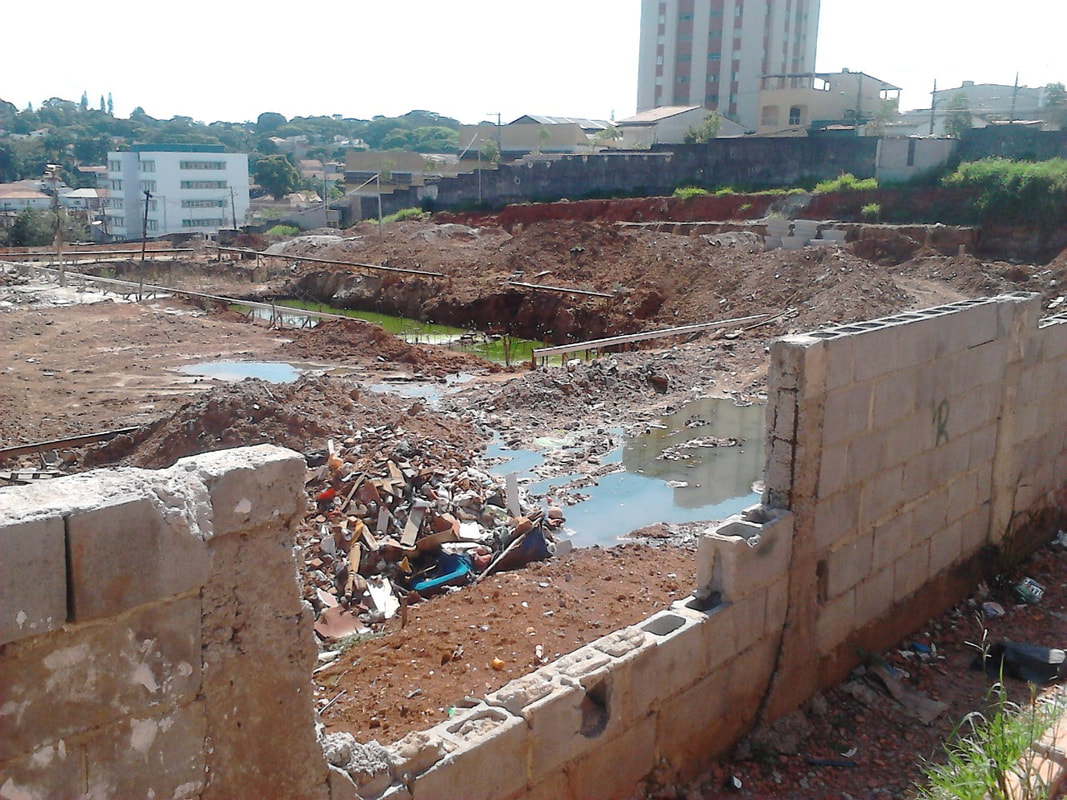
“There's a scar in the middle of town. There is no LRT system, no BRT system, but there are a lot of holes where should be railway tracks”, said Angélica Cassiano Costa, a resident of Cuiabá.
Imagem
The Cuiabá/Varzea Grande Light Rail Transit (LRT). Photo: Thayla Maria Silva Trentin
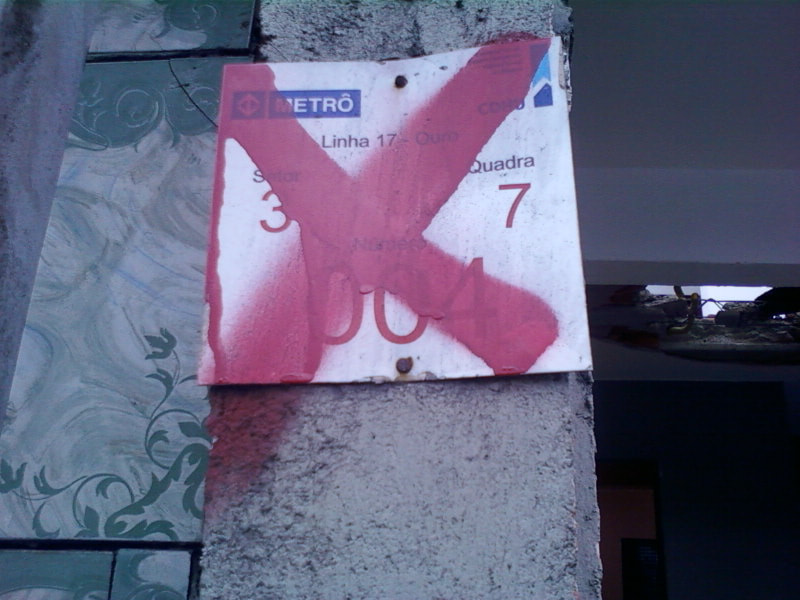
Unlike other projects, the monorail in São Paulo has not been shelved or interrupted. Nevertheless, the project, called Line 17-Gold, with 18km, is still in the initial phase, and the total cost has increased from USD 543 million to USD 780 million.

According to the executive director of the National Association of Passenger Rail Operators (ANPTrilhos), Roberta Marchesi, the urban mobility projects, especially those involving rail transport, need to be planned at least eight years in advance.

“The infrastructure planning needs to start at the time of the country's candidacy for the mega sporting event, not after the country is chosen to host it. The problem is waiting to officially become the host country to start carrying out the works”, said the specialist. 

“Unfortunately, Brazil missed the opportunity to create and enjoy a more advanced mobility system during the FIFA World Cup,” concluded Marchesi.

Expropriations ​

Instead of being benefited by the infrastructure projects, thousands of Brazilians were harmed. Social movements estimate that around 250,000 people have been displaced or removed from their homes due to the infrastructure works.

In Cuiabá, even with the LRT 
project stagnant, 359 removals or house repossession processes were activated, according to data collected via FOI Request.

In Fortaleza, the Parangaba-Mucuripe LRT caused 3,092 expropriation processes, said the local Infrastructure Secretariat (Seinfra).

There were also removals in other cities, such as Porto Alegre, Rio de Janeiro and São Paulo. 

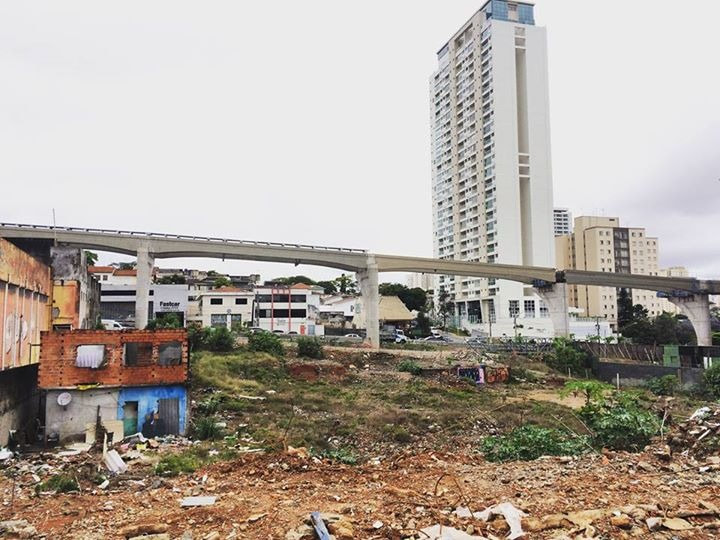
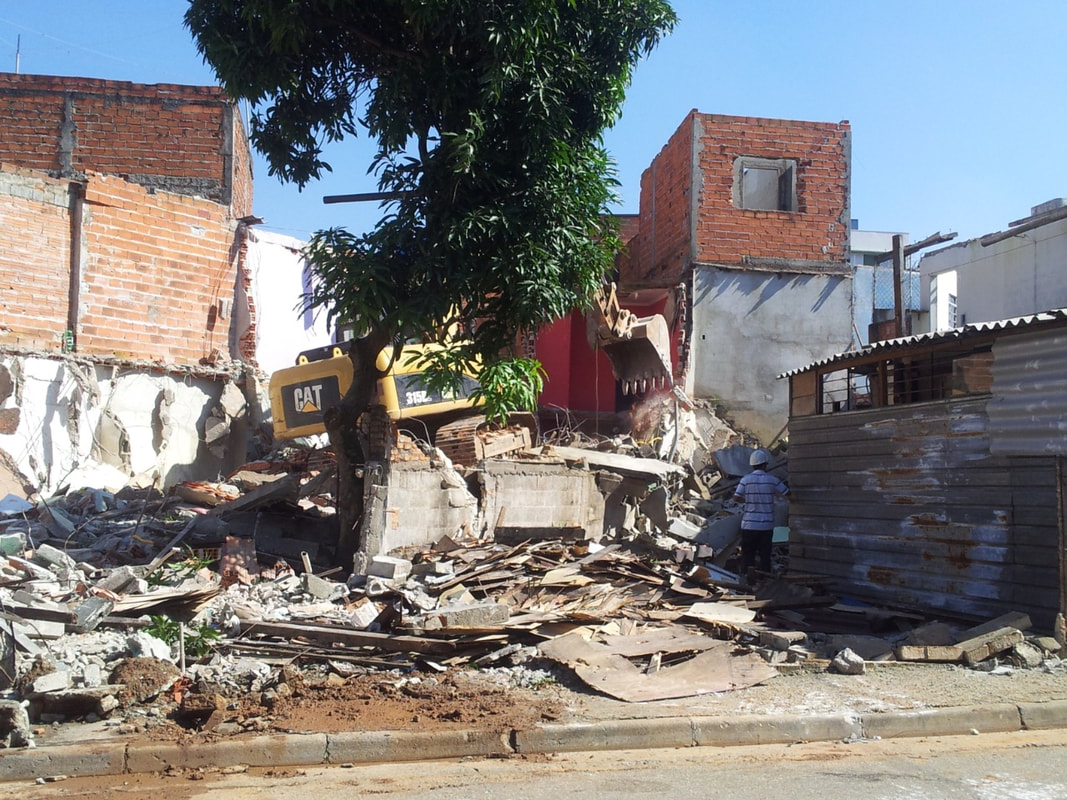
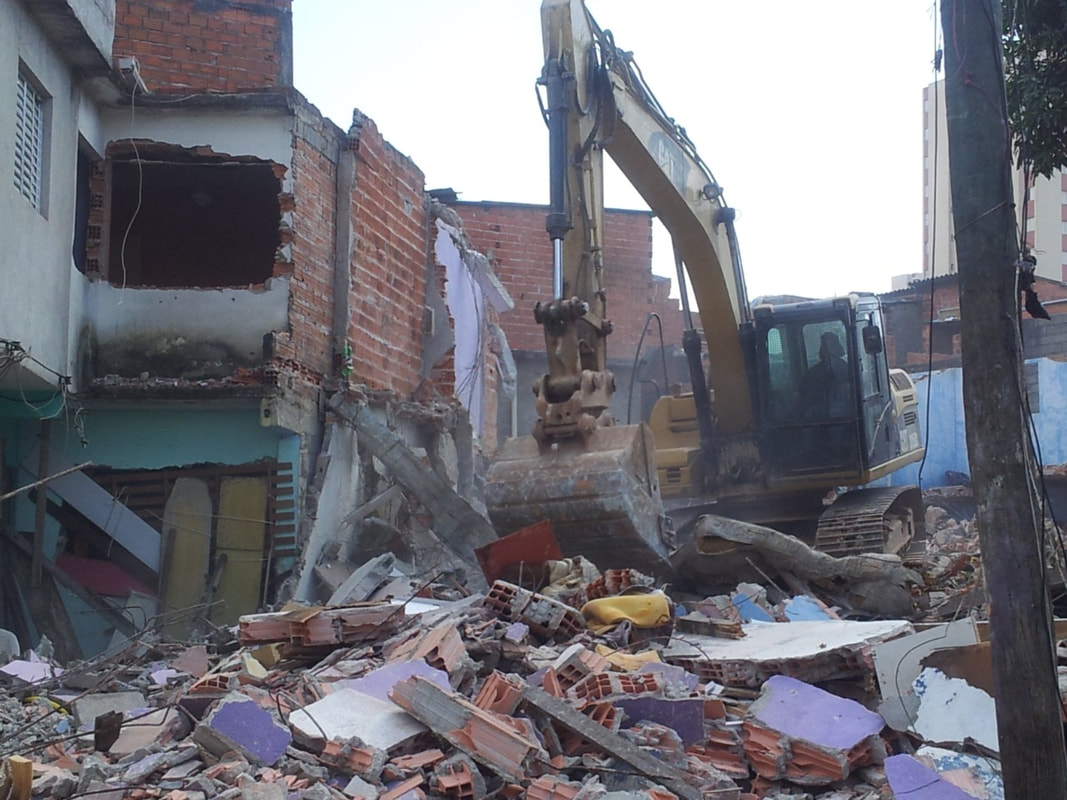
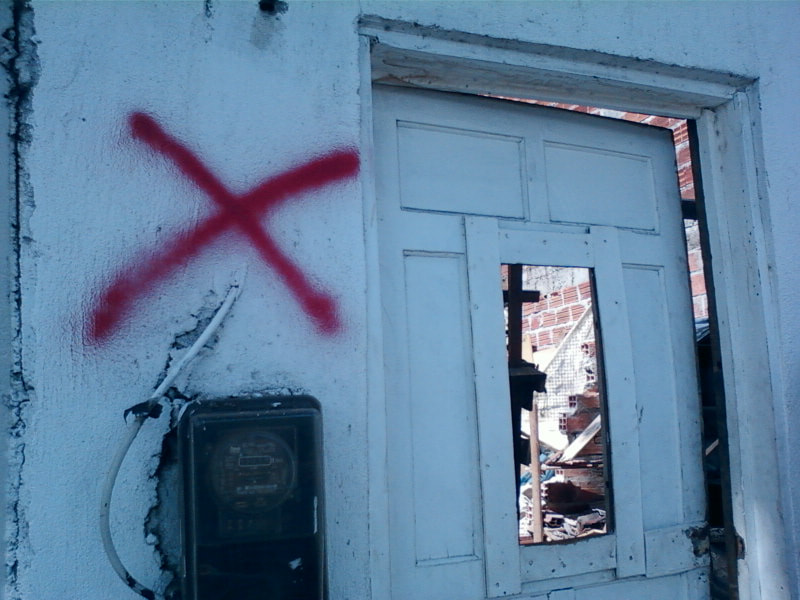
Geilson Sampaio's family is one of those who had their house demolished due to the monorail in São Paulo. In total, 461 families were evacuated from the favelas of Buraco Quente and Comando.

Residents of the two favelas were told in 2012 that they should leave their homes. In 2013, the demolitions began. 


​
“The community was in shock as it did not expect to be removed. The favela had existed for over 40 years and was consolidated,” said Sampaio.
​
Two options were offered to the residents: a cash compensation, based on the appraisal of the favela property they lived in, or the granting of a new house in a popular housing development. 

“Around 120 families chose the second option. However, 10 years later, they are still waiting for the houses, as the property was not built”, said Sampaio. 

According to the researcher Orlando Santos Junior, from the Metropolis Observatory
institute, these episodes prove that it is inappropriate to use the term “legacy” to refer to the outcomes of a mega sporting event. ​
 "It creates a great consensus that mega sporting events are always positive for the society. This concept ends up legitimizing a series of exception procedures”, said Junior.
Houses being destroyed in the favelas of Buraco Quente and Comando in 2013. Photos: Geilson Sampaio
Get the data
Site desenvolvido pelo Weebly. Administrado por HostGator Brasil
  • Home
  • Banco de Dados
    • Copa do Mundo de 1950 >
      • Copa 50 em São Paulo
      • Copa 50 Rio de Janeiro
      • Copa 50 Curitiba
      • Copa 50 Porto Alegre
      • Copa de 50 em Belo Horizonte
      • Copa 50 em Recife
      • Legado da Copa de 1950
    • Copa do Mundo de 2014 >
      • Copa de 2014 em São Paulo
      • Copa de 2014 Brasília
    • Documentos Oficiais >
      • Matriz de Responsabilidade 2014
      • Estádios pós-Copa
    • Reportagens Especiais >
      • Turismo
      • Obras Inacabadas 2014
      • Comparação das Copas
      • Elefantômetro
      • O Preço das Copas
  • Contato
  • Quem somos
  • O projeto
  • O legado intangível